“Guilt, Witnessing, and Writing the Early Aftermath,” in The Cambridge Companion to Late Modernism
This chapter considers the impress of postwar jurisprudence on the British literary imagination. It focuses on the international community’s turn to law in response to wartime atrocities through the establishment of postwar criminal trials, particularly the Nuremberg trials (1945-46) and the Adolf Eichmann trial (1961). These criminal trials sought to make of sense of and judge the historic violence of the Second World War in ways that borrowed from but also exceeded the logic of the courtroom. Their formations of thought became a late modernist structure of feeling, as authors including Elizabeth Bowen, Rebecca West, Muriel Spark, and Stephen Spender reworked legal concepts to address complex topics of political and social guilt. This relationship between cultural production and legal transition was not one of determination or straightforward reflection, but rather one in which writers engaged with shared representational issues such as the character of evil, narrative perspective, and predetermined plots. In particular, this chapter explores how the concepts of guilt and witness precipitate from literary invocations of the trial, manifesting in forms that look backwards as well as forwards, inward as well as outward.
The Cambridge Companion to Late Modernism (forthcoming 2026)
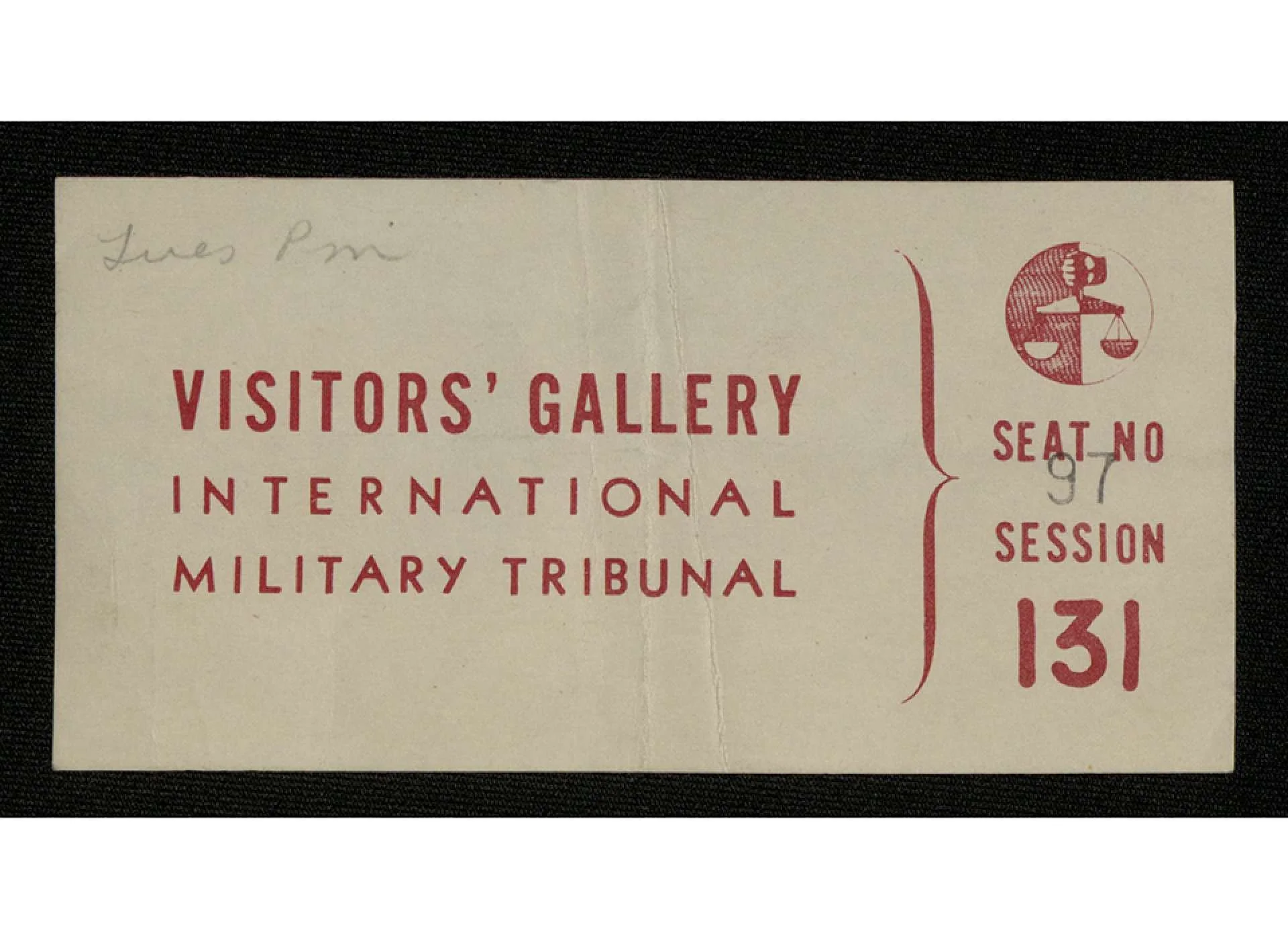
[image: Nuremberg Trial Visitor Pass, National WWII Museum]